Treatment Tables
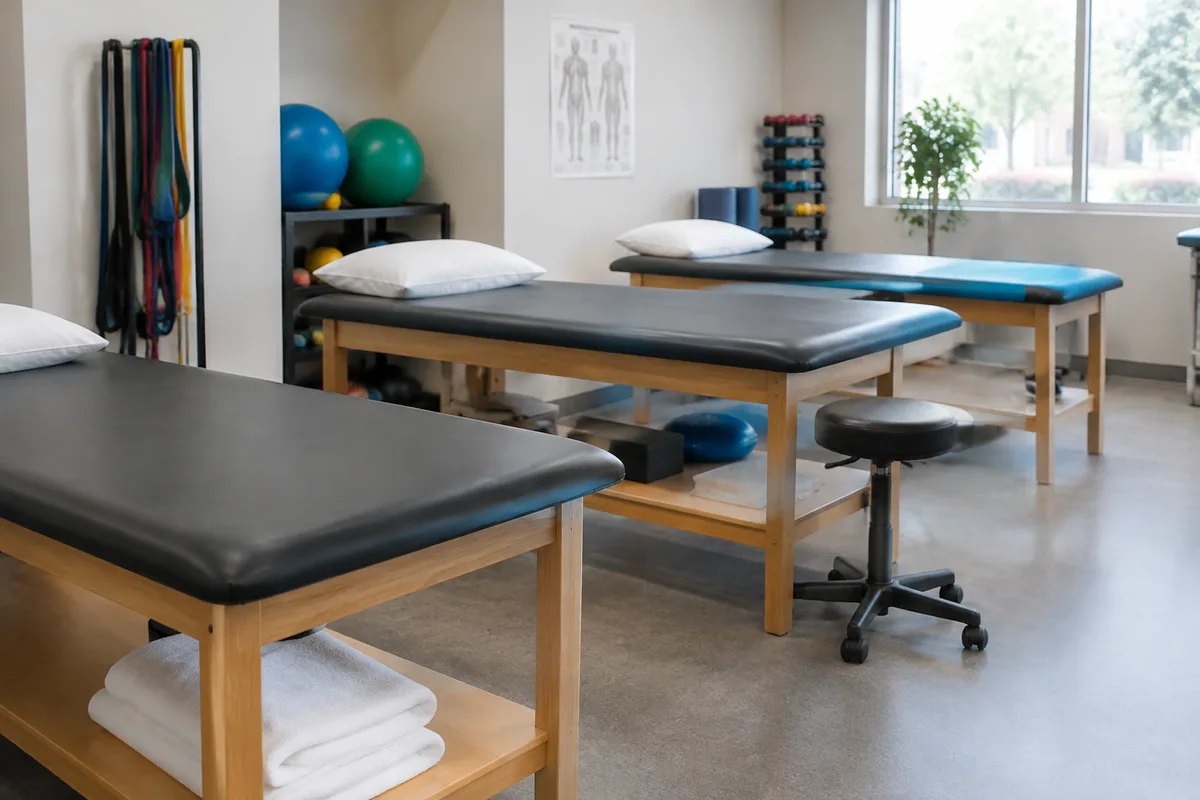
Treatment Tables
Treatment tables are the everyday workspace of physical therapy — the adjustable, supportive surfaces where hands-on care, stretching, and guided exercise all take place. Simple as they sound, the right table setup makes a real difference in how comfortably and precisely therapy can be delivered.
What treatment Tables is
A treatment table is a padded, height- and angle-adjustable surface used for evaluation, manual therapy, stretching, and many exercise-based interventions. Unlike a fixed exam table, most treatment tables can be raised or lowered, tilted, or broken into sections so a therapist can position a patient's body precisely for the task at hand — whether that's mobilizing a stiff shoulder, guiding a straight-leg raise, or helping someone safely get on and off the surface after surgery.
Earlier generations of clinic furniture were often flat, non-adjustable tables that forced patients into whatever position the table allowed. Modern adjustable tables reverse that relationship: the table adapts to the patient rather than the other way around. This is especially important for people with limited mobility, pain that worsens in certain positions, or recent surgery, since even small changes in height or incline can reduce strain during a session.
How we use it at Physical Therapy and Rehabilitation Center of Brooklyn
At Physical Therapy and Rehabilitation Center of Brooklyn, adjustable treatment tables are positioned throughout our treatment area so therapists can set up each session for comfort and accessibility before hands-on work or exercise begins. Because our services span post-surgical rehabilitation, back and neck pain treatment, sports injury rehabilitation, and neurological rehabilitation, the ability to adjust a table's height and angle helps accommodate a wide range of needs — from a patient who needs extra support getting seated to one who needs a firm, level surface for manual therapy or stretching.
Treatment tables also serve as the starting or ending point for other equipment used at our practice. A session might begin on a table with heat packs or electrical stimulation to prepare tissue, move into manual therapy or exercise on the same table, and finish with instruction on exercises using resistance bands, exercise balls, or foam rollers. The table itself is the constant, comfortable base that ties these pieces of a visit together.
What it means for you
A well-adjusted treatment table means less unnecessary strain during your visit. When a table can be raised, lowered, or tilted to match your body and your condition, therapists can work more precisely and you can stay more relaxed throughout the session. This matters most for patients dealing with acute pain, recent surgery, or balance concerns, where getting into and out of position safely is part of the treatment itself.
Comfortable positioning also supports clearer communication. When you're not distracted by an awkward position or unnecessary discomfort, it's easier to tell your therapist exactly where you feel tightness, pain, or resistance — information that shapes how your treatment plan is adjusted from visit to visit.
What to expect during your visit
At the start of a session, your therapist will typically adjust the table's height and any sections before you get on, taking into account your condition and how easily you can move. You may lie face-up, face-down, or on your side depending on the area being treated, and the table may be repositioned partway through if a different angle is needed for a particular technique or exercise.
During manual therapy, you'll generally feel gentle pressure, stretching, or guided movement rather than sharp pain. If the session includes exercise, the table may support part of your body while you work through a movement, or you may transition off the table to standing or floor-based work using mats or other equipment. Time spent on the table varies by treatment plan, since it's simply the setting for whatever combination of manual therapy, exercise, or modalities your visit includes.
Frequently asked questions
Is using a treatment table uncomfortable?
Treatment tables are padded and adjustable specifically to minimize discomfort. Your therapist will position the table and any supports to keep you as comfortable as possible given your condition, and will adjust further if something doesn't feel right.
How long will I be on the table during a visit?
This depends entirely on your treatment plan. Some visits involve brief time on the table for a specific technique, while others use it as a base for a longer combination of manual therapy and guided exercise.
Will the table be adjusted for my specific condition?
Yes. Height, angle, and positioning are set up based on what your session requires and what your body can comfortably tolerate, and can be changed at any point if needed.
Is table-based treatment suitable for people with limited mobility?
Adjustable tables are often especially helpful for patients with limited mobility, recent surgery, or balance concerns, since height and angle can be set to make getting on and off the table easier and safer.
If you'd like to know more about how treatment tables fit into your care, reach out to Physical Therapy and Rehabilitation Center of Brooklyn to ask about scheduling a visit.
This content is for general information only and isn't medical advice. Talk with a qualified provider about your own situation. If you have a medical emergency, call 911.