Traction Tables
Traction Tables
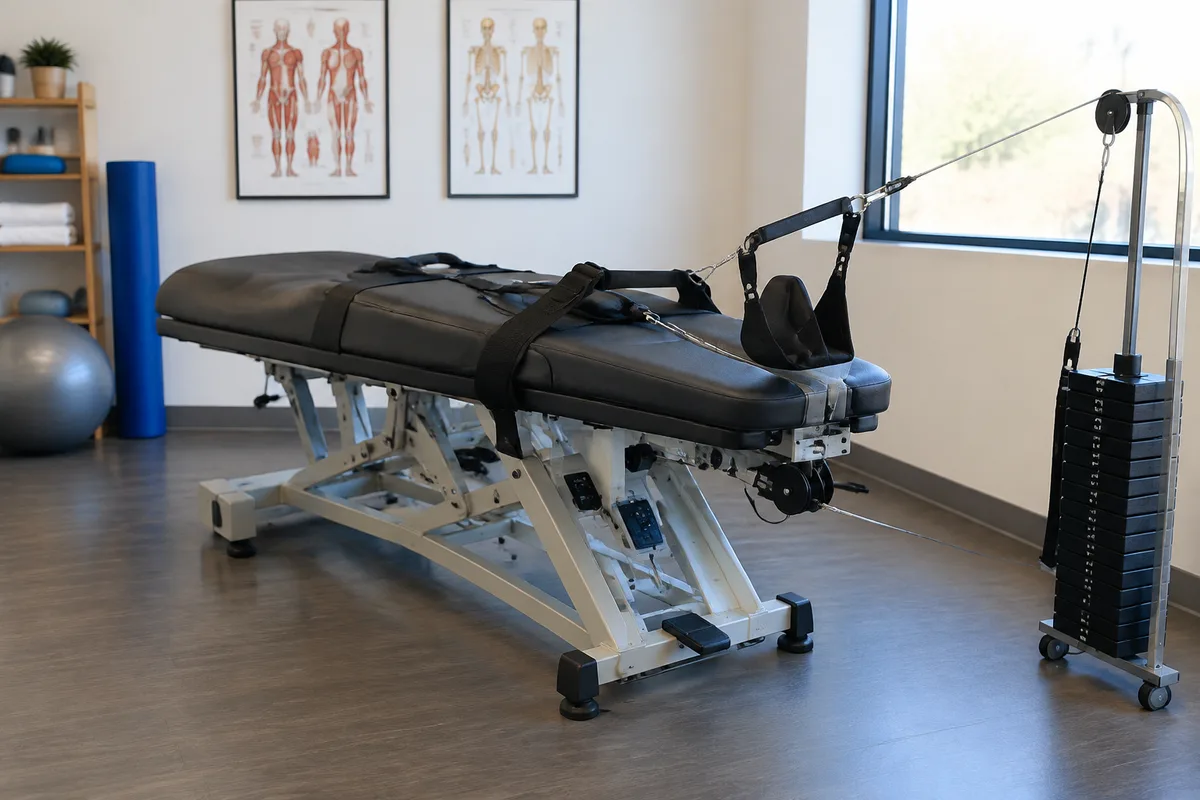
Traction tables are motorized treatment tables that gently stretch the spine to ease pressure on the neck and back. At Physical Therapy and Rehabilitation Center of Brooklyn, they are one of the tools our team uses for patients dealing with spinal pain, nerve irritation, and stiffness that limits daily movement.
What traction tables is
A traction table applies a controlled, measured pulling force to the spine, either along the neck or the lower back. The gentle stretch increases the space between vertebrae, which can take pressure off compressed discs, joints, and nerve roots. Older forms of manual traction relied on a therapist pulling by hand or on simple hanging weights, which made it hard to control the amount of force or hold it steady over time.
Motorized traction tables improved on this by allowing precise, repeatable settings for force, angle, and timing. The table can hold a steady pull, or alternate between gentle pulling and releasing, depending on what a patient's spine responds to best. Because the force is adjustable, the same table can be used for a wide range of neck and back conditions, from mild stiffness to more pronounced nerve-related pain.
How we use it at Physical Therapy and Rehabilitation Center of Brooklyn
Our traction tables are set up to gently stretch the spine and relieve neck and back pressure as part of a broader treatment plan. Traction is often paired with other hands-on and equipment-based care available on site, such as our adjustable treatment tables for manual therapy, heat packs to relax muscles beforehand, or electrical stimulation and ultrasound machines to manage pain and support healing around the treated area.
Traction tables are commonly used for patients receiving care under our Back Pain Treatment, Neck Pain Treatment, and Nerve Pain Rehabilitation services, since these programs often involve spinal pressure or nerve irritation that traction is designed to address. For patients with more significant disc compression, our Spinal Decompression service using the DRX9000 system offers a separate, computer-controlled option; your therapist will discuss which approach fits your specific situation.
What it means for you
Traction can offer a way to relieve spinal pressure without surgery or injections, which many patients find reassuring. Because the force is adjustable and monitored, sessions can be tailored to your comfort level rather than using a one-size-fits-all approach.
For patients managing nerve-related pain, easing pressure on a nerve root can help reduce the sharp or radiating discomfort that often comes with it. Traction is also generally a passive treatment, meaning you can rest on the table while it works, which can be a welcome break from more active exercise-based therapy on the same visit.
What to expect during your visit
Before starting, your therapist will position you comfortably on the table, usually lying down, and secure a harness around the neck or hips depending on the area being treated. The table is then set to a specific force and timing pattern based on your condition and comfort.
During treatment, you should feel a gentle stretching sensation rather than any sharp pull or pain. Most sessions last a short period, often somewhere in the range of ten to twenty minutes, though your therapist will adjust this based on how you respond. Afterward, some patients feel immediate relief in tightness or pressure, while others notice the benefit building gradually over a series of visits. Traction is frequently combined with other treatment in the same appointment, such as manual therapy or targeted exercises.
Frequently asked questions
Is spinal traction safe?
Traction is a gentle, controlled treatment, and the force applied is adjusted to your comfort and condition. Your therapist monitors your response throughout each session and adjusts settings as needed.
Will traction hurt?
Traction should not cause pain. Most patients feel a mild, steady stretch rather than any sharp or uncomfortable pulling, and you can let your therapist know at any point if the sensation feels too strong.
How long does a traction session take, and how often will I need it?
A typical session lasts roughly ten to twenty minutes, often as part of a longer visit that includes other therapy. How often you use traction depends on your condition and how you respond, which your therapist will discuss with you as your plan develops.
Who is traction suitable for?
Traction is commonly used for patients with neck or back pain, stiffness, or nerve-related symptoms tied to spinal pressure. It is not right for every condition, so your therapist will evaluate your history and symptoms first to determine whether it fits your treatment plan.
If neck or back pressure is limiting your movement or comfort, reach out to Physical Therapy and Rehabilitation Center of Brooklyn to ask whether traction tables could be part of your care.
This content is for general information only and isn't medical advice. Talk with a qualified provider about your own situation. If you have a medical emergency, call 911.