Spinal Decompression
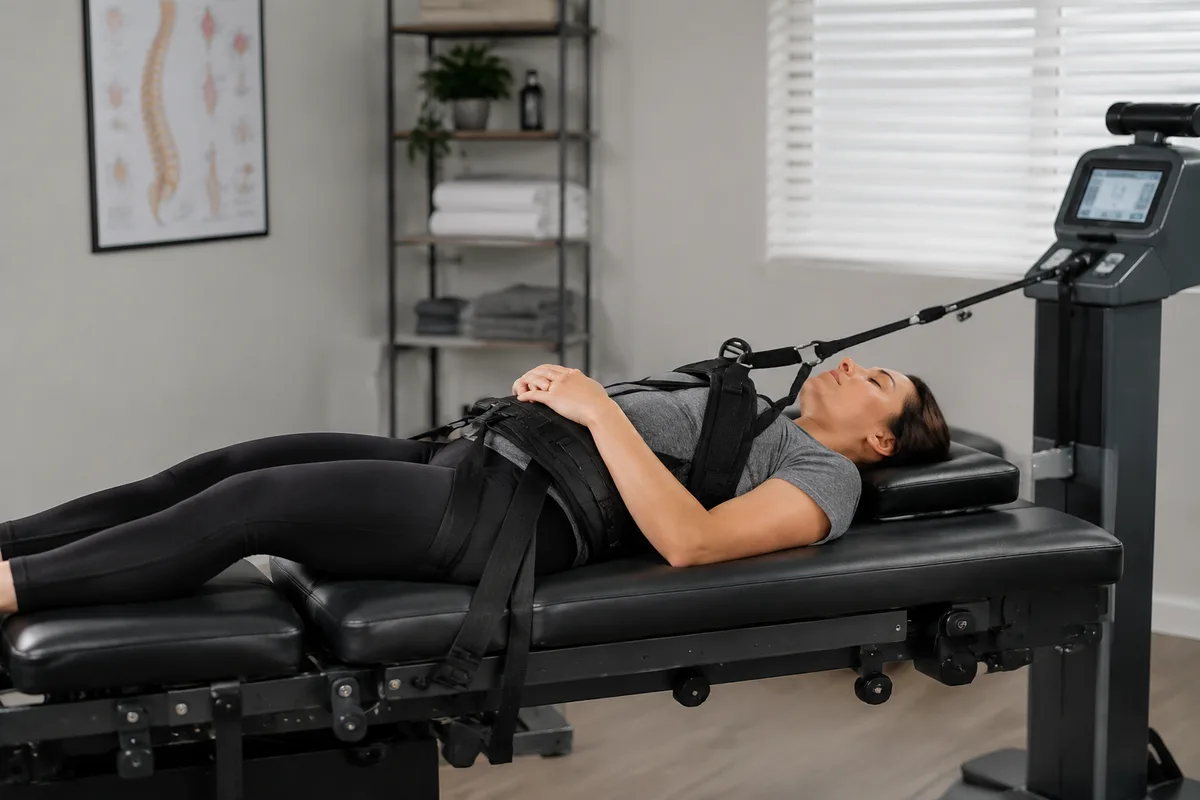
Spinal Decompression
Spinal decompression is a non-surgical approach used to ease pressure on spinal discs and the nerves that run near them. At Physical Therapy and Rehabilitation Center of Brooklyn, it is one of the on-site capabilities available to patients dealing with back and neck pain that traces back to disc or nerve irritation.
What spinal Decompression is
Spinal decompression works by gently stretching the spine, creating more space between vertebrae. This reduces pressure on the discs that cushion the spine and can relieve pinching or irritation of nearby nerves. The idea is straightforward: when a disc is compressed or bulging, it can press on surrounding structures and cause pain, numbness, or weakness. By carefully separating the vertebrae, decompression aims to take pressure off those structures and create better conditions for the area to settle and heal.
This approach is generally considered as an alternative to more invasive options for people whose pain stems from disc-related issues. It is applied using controlled, gradual force rather than the abrupt movements associated with manual adjustments, which is part of why it is often introduced as a gentler option for certain spinal conditions.
How we use it at Physical Therapy and Rehabilitation Center of Brooklyn
At our practice, spinal decompression is offered as part of a broader approach to back and nerve-related pain. It is commonly considered for patients whose symptoms connect to conditions addressed under our Back Injury Rehabilitation and Nerve Pain Rehabilitation services, and it can be incorporated into a Physical Therapy plan alongside other techniques such as Chiropractic Care.
Because accurate diagnosis matters before starting any decompression program, our on-site MRI & X-Ray imaging can help clarify what is happening at the disc or nerve level before treatment begins. In some cases, decompression sessions are paired with Cold Laser Therapy, which is also used on-site to help manage pain and inflammation, giving a more rounded approach to recovery.
Every plan is built around the individual patient's presentation, so the frequency and duration of decompression sessions will vary depending on what a clinician finds appropriate for that person's condition.
What it means for you
For patients, a non-surgical option like spinal decompression can mean avoiding more invasive procedures, at least as a first step. Because it is applied gradually and with controlled settings, many patients find it a comfortable experience rather than something painful or jarring.
Other general benefits patients often value include:
- Non-invasive approach — no incisions or surgical recovery time involved.
- Complementary to other care — can be combined with therapy, chiropractic techniques, or pain-management approaches as part of one plan.
- Clear communication — imaging findings can help explain what is being treated and why a particular approach is chosen.
As with any treatment for disc or nerve-related pain, individual results vary, and a clinician will discuss whether decompression is a reasonable fit for a specific case.
What to expect during your visit
A typical visit begins with a review of your symptoms and, if needed, imaging to understand what is happening in the spine. Once a plan is set, you will usually lie on a table designed for decompression, with straps or supports positioned around the pelvis and, depending on the area being treated, the upper body.
During the session, the table applies a slow, controlled stretch to the spine, alternating between periods of gentle tension and release. Sessions are generally brief, and most patients describe the sensation as a mild pulling or stretching feeling rather than pain. Afterward, you may be given guidance on movement or activity for the rest of the day, and follow-up visits are scheduled based on how your body responds.
Frequently asked questions
Is spinal decompression safe?
Spinal decompression is a controlled, non-surgical technique that has been used as an alternative to more invasive procedures for certain disc and nerve-related conditions. A clinician will review your history and any imaging before recommending it, to make sure it is an appropriate option for your situation.
Does spinal decompression hurt?
Most patients describe the sensation as a gentle stretch rather than pain. The force applied is gradual and controlled, which is part of why it is often introduced as a more comfortable option compared to some manual techniques.
How long does a session take, and how many will I need?
An individual session is typically brief, but the total number of sessions depends on your specific condition and how your body responds over time. Your clinician will outline a plan based on your evaluation and any imaging findings.
Who is spinal decompression suitable for?
It is generally considered for people with back or neck pain linked to disc or nerve irritation. Suitability depends on your specific diagnosis, so an evaluation, and often imaging, comes first to confirm it is the right fit for you.
If you're dealing with back or neck pain and want to learn whether spinal decompression could be part of your care, reach out to Physical Therapy and Rehabilitation Center of Brooklyn to ask more or schedule a visit.
This content is for general information only and isn't medical advice. Talk with a qualified provider about your own situation. If you have a medical emergency, call 911.