Pulley Systems
Pulley Systems
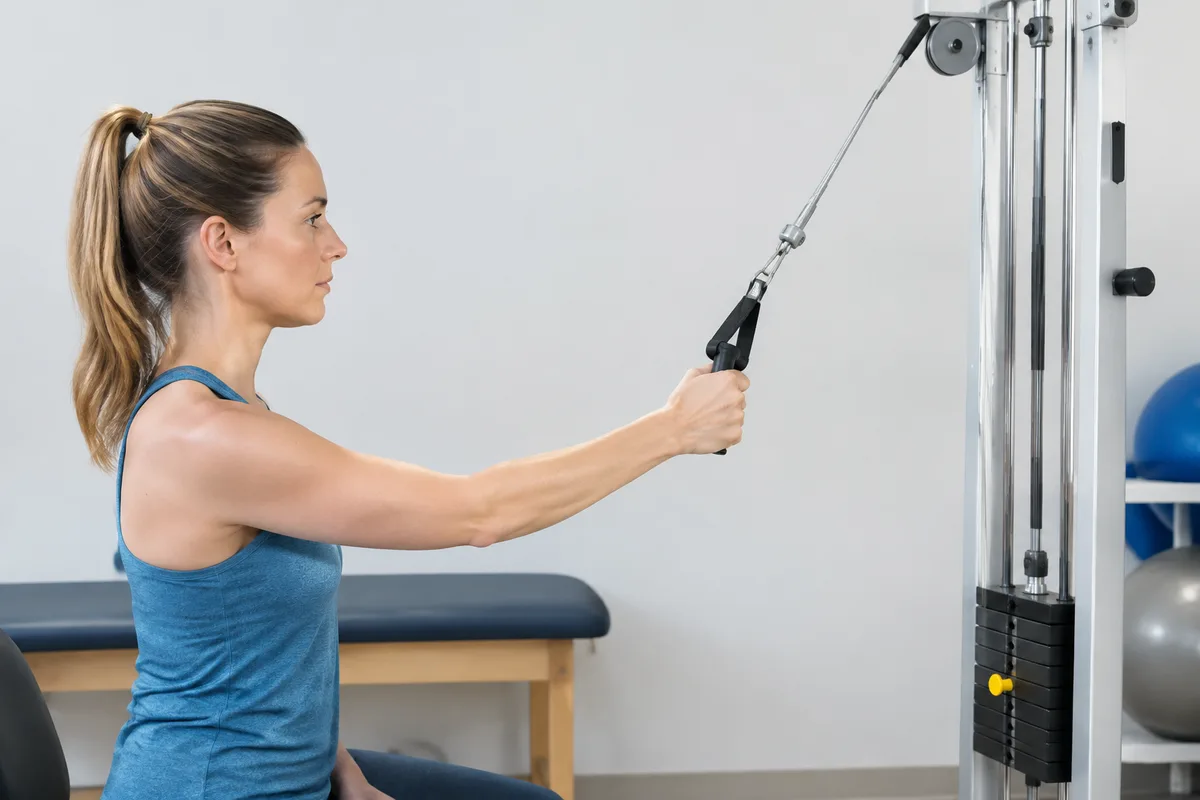
Overhead pulley systems are a simple, mechanical tool used in physical therapy to help patients regain shoulder and arm range of motion. At Physical Therapy and Rehabilitation Center of Brooklyn, pulleys are part of the hands-on and exercise-based approach to restoring movement after injury, surgery, or a period of pain that has limited how the shoulder and arm move.
What Pulley Systems is
A pulley system consists of a rope or cable that runs through an overhead wheel, with a handle on each end. The patient holds one handle in each hand and uses the strong or unaffected arm to gently pull down, which lifts the weaker or more limited arm upward and overhead. The motion is controlled by the patient, which allows the exercise to be adjusted moment to moment based on comfort and tolerance.
Before tools like this were common, patients often relied solely on a therapist's hands or on unassisted stretching to work on shoulder motion. The pulley gives patients a way to actively assist their own movement, using their own body as the source of gentle, controlled force rather than depending entirely on outside help. This makes the exercise easier to repeat consistently and easier to fold into a home routine.
How we use it at Physical Therapy and Rehabilitation Center of Brooklyn
Pulley systems are one of the pieces of equipment used on-site to help restore shoulder and arm range of motion. They are typically brought into a plan alongside other tools such as treatment tables, resistance bands, and exercise mats, so that a session can move smoothly from stretching, to assisted motion on the pulley, to strengthening work as mobility improves.
Because pulley work is gentle and self-paced, it fits naturally into rehabilitation for shoulder pain, post-surgical recovery, and general orthopedic care where regaining overhead reach is a goal. The exercise is usually introduced once acute pain has settled enough to tolerate motion, and it is adjusted over time as range and comfort increase.
What it means for you
Working with a pulley gives you a direct role in your own recovery. Because you control the pull with your stronger arm, you can move at a pace that feels manageable, which can make stretching a stiff or healing shoulder feel less intimidating than motion guided entirely by someone else.
Other general benefits patients experience with pulley-based exercise include:
- Self-paced motion — you set the speed and depth of the stretch using your own arm strength.
- Consistent repetition — the same movement pattern can be repeated in a controlled way during a visit.
- Bilateral involvement — both arms work together, which can help the affected side relearn motion patterns.
- Simple carryover — the movement pattern is easy to understand and can inform a home stretching routine.
What to expect during your visit
If pulley work is part of your plan, it typically happens after any warm-up or manual therapy, when your shoulder is already loosened up and ready for active movement. You will stand or sit facing the pulley, holding one handle in each hand, with the overhead wheel positioned so the rope runs smoothly.
During the exercise, you pull down with your uninvolved or stronger arm while letting the other arm rise upward with the assistance of the pulley. Movements are usually slow and controlled, and you are encouraged to stop at the point where you feel a gentle stretch rather than pain. A set of repetitions is often brief, lasting only a few minutes, and may be repeated more than once during a session depending on your plan.
Afterward, it is common to feel a mild stretching sensation in the shoulder or upper arm, similar to how a muscle feels after gentle stretching. This is generally expected and settles quickly; any sharp or lasting pain should be reported so your plan can be adjusted.
Frequently asked questions
Is pulley exercise safe for a healing shoulder?
Pulley exercise is designed to be low-impact and self-controlled, which makes it a common choice for shoulders that are healing or recovering range of motion. The amount of pull is set by you, so the movement can be kept gentle, and it is typically introduced only once your condition is ready for active motion.
Will it hurt?
You may feel a mild stretch as your arm moves overhead, but the goal is comfortable movement, not pain. Because you control the pull with your other arm, you can ease off at any point if the stretch feels too strong.
How long does a pulley exercise session take?
The exercise itself usually takes only a few minutes per set, and it is often combined with other exercises and manual therapy during a longer visit. How often it is used depends on your individual plan and how your shoulder responds over time.
Who is pulley therapy suitable for?
Pulley systems are generally suitable for patients working on shoulder or arm range of motion, including after surgery, injury, or a period of stiffness and pain. Suitability for any specific exercise depends on your individual condition, which is assessed as part of your care.
If you have shoulder or arm stiffness and want to know whether pulley exercise fits your recovery, reach out to Physical Therapy and Rehabilitation Center of Brooklyn to schedule a visit and discuss your options.
This content is for general information only and isn't medical advice. Talk with a qualified provider about your own situation. If you have a medical emergency, call 911.