Kinesiology Tape
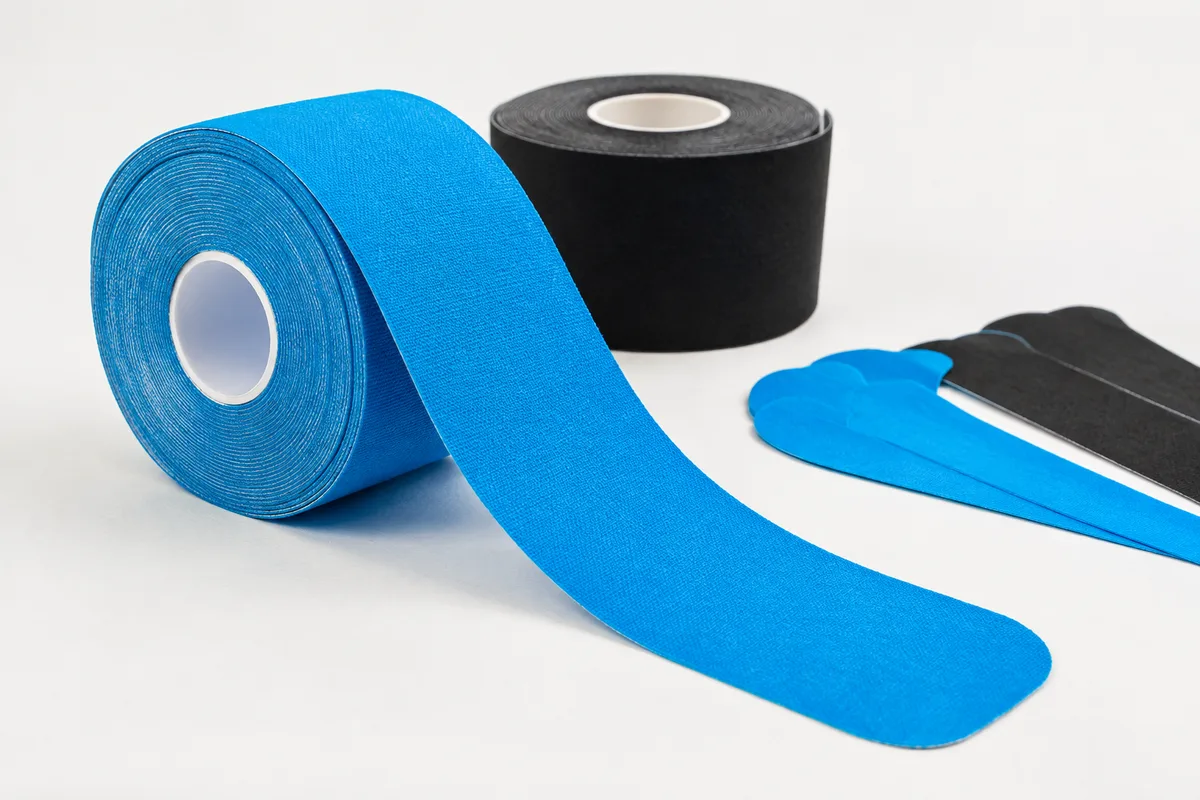
Kinesiology Tape
Kinesiology tape is a thin, elastic tape applied directly to the skin over muscles and joints. It supports the tissue underneath while still allowing a full range of motion, which makes it a common addition to a broader physical therapy plan rather than a stand-alone treatment.
What kinesiology Tape is
Kinesiology tape is made from a stretchy cotton or synthetic material with an adhesive backing, designed to move with the skin instead of restricting it. Unlike rigid athletic tape or bracing, which limits motion to protect an area, kinesiology tape is applied with a specific stretch and direction so it can gently lift the skin, support underlying muscle, or guide how a joint moves during activity.
The tape can stay on for several days at a time, including through showers, which sets it apart from stiffer wraps that need to be removed after a single use. Because it flexes with the body, it is often used for conditions where some support is helpful but complete immobilization is not desired.
How we use it at Physical Therapy and Rehabilitation Center of Brooklyn
At Physical Therapy and Rehabilitation Center of Brooklyn, kinesiology tape is applied as part of hands-on treatment sessions, giving muscles and joints extra support between visits while patients continue their normal movement. It is commonly used alongside exercise therapy, manual therapy, and sport or work-related rehabilitation, where maintaining motion during recovery matters.
The tape can also complement other on-site tools. For example, a patient working through balance training with balance pads or balance boards may have tape applied to a supporting joint, or someone recovering from a sports injury may use tape alongside electrical stimulation or ultrasound therapy as part of the same visit. Because taping is quick to apply, it fits easily into a session without adding meaningful time to a visit.
What it means for you
For patients, kinesiology tape offers a way to feel supported during daily activity without giving up movement. Many people find the light compression and skin feedback reassuring when returning to walking, lifting, or sport after an injury.
- Freedom of movement — the tape flexes with joints and muscles instead of locking them in place.
- Support between visits — it can stay on for a few days, extending a sense of support beyond the treatment session itself.
- Comfort — the lightweight material is generally well tolerated during regular activity, including bathing.
- Simple addition — taping pairs easily with other therapies already part of a treatment plan.
What to expect during your visit
Before taping, the treatment area is checked for any skin irritation or sensitivity, and the skin is typically clean and dry so the tape adheres well. The therapist then applies the tape in strips, adjusting tension and direction based on the muscle or joint being supported and the goal of that day's treatment.
Application itself takes only a few minutes and is not painful — you may feel a light pulling sensation on the skin as the tape is smoothed into place. Once applied, you should be able to move the area through its normal range; if anything feels overly tight or restrictive, let your therapist know so adjustments can be made.
Afterward, the tape can generally stay in place for normal daily activities, including showering, for several days before it needs to be removed or replaced. Your therapist will let you know how long to keep it on and what to watch for in the meantime.
Frequently asked questions
Is kinesiology tape safe?
Kinesiology tape is generally well tolerated, and the adhesive is designed for use directly on skin. Your therapist will check for any known skin sensitivities before applying it and can remove or adjust the tape if irritation develops.
Does applying the tape hurt?
No — application involves smoothing the tape onto the skin with a specific stretch, which may feel like light pulling but is not painful. Removal is also generally easy and similar to removing an adhesive bandage.
How long does the tape stay on?
Kinesiology tape can typically remain in place for several days, including through normal activities like showering. Your therapist will advise on the right length of time based on your treatment and how your skin responds.
Who is kinesiology tape suitable for?
It is commonly used for patients working through sports injuries, joint or muscle support needs, and general exercise therapy, though suitability depends on the individual and the area being treated. Your therapist will determine whether taping fits appropriately into your specific treatment plan.
If you'd like to learn more about whether kinesiology tape could support your recovery, reach out to Physical Therapy and Rehabilitation Center of Brooklyn to ask about adding it to your treatment plan.
This content is for general information only and isn't medical advice. Talk with a qualified provider about your own situation. If you have a medical emergency, call 911.