Balance Pads
Balance Pads
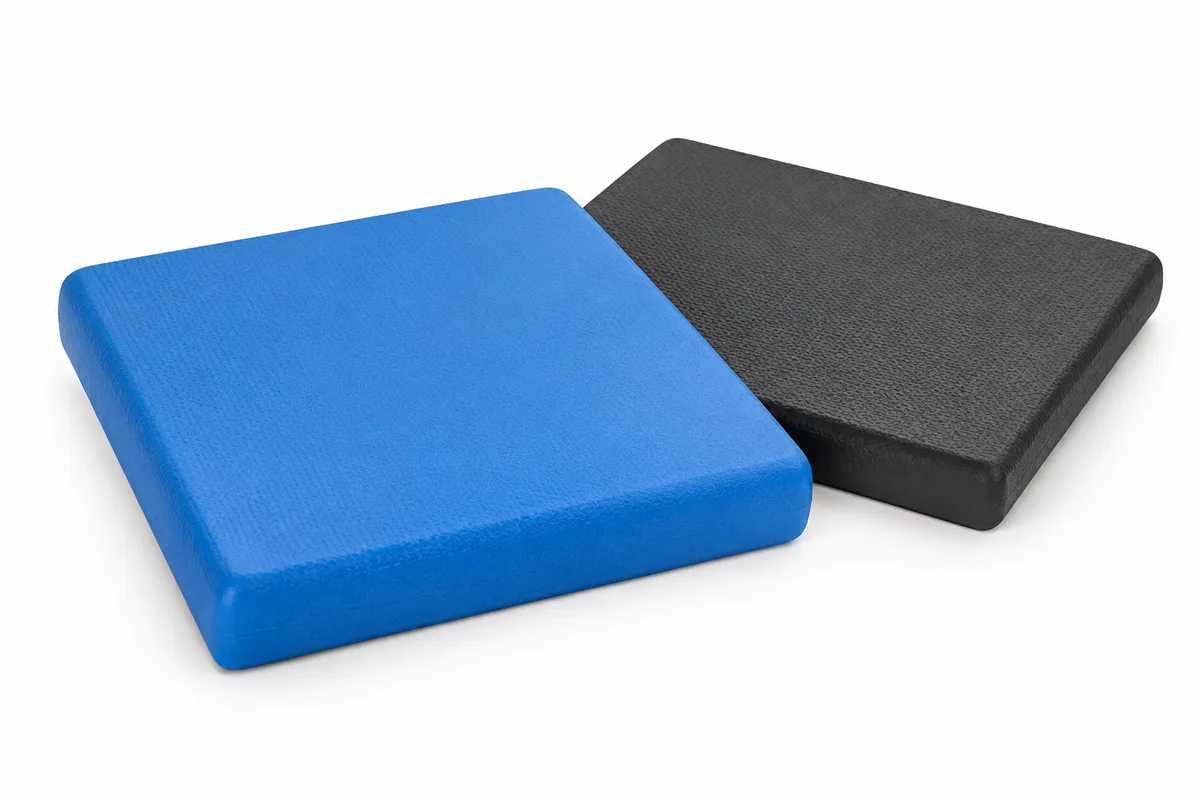
Balance pads are soft foam surfaces used during physical therapy to challenge stability and retrain the muscles and reflexes that keep you steady on your feet. They are a simple, low-tech tool with a specific purpose: making the body work harder to find its balance so that skill carries over into daily life.
What balance Pads is
A balance pad is a cushioned block of foam, usually a few inches thick, that creates an uneven or unstable surface to stand, step, or shift weight on. Standing on solid, flat ground gives your joints and inner ear clear, consistent feedback about where your body is in space. A foam pad removes some of that certainty. Your ankles, knees, hips, and core have to make small constant adjustments to keep you upright, which is exactly the kind of work that trains balance.
Before tools like this were common, balance training often relied only on standing exercises on firm floors or basic single-leg stands. Foam pads add a graded, adjustable layer of difficulty — softer or thicker pads are harder to balance on than firmer, thinner ones — so a therapist can dial the challenge up or down as a patient progresses.
How we use it at Physical Therapy and Rehabilitation Center of Brooklyn
At Physical Therapy and Rehabilitation Center of Brooklyn, balance pads are one of the tools used to retrain balance and ankle control as part of a broader treatment plan. They are often introduced alongside other on-site equipment such as balance boards, which add a wobbling or tilting element once standing balance on a pad is comfortable, and exercise mats, which support floor-based strengthening that complements standing balance work.
Balance pads fit naturally into several of the practice's services, including balance training, fall prevention, foot and ankle rehabilitation, vestibular therapy, and neurological rehabilitation. A therapist selects exercises on the pad based on what a patient is working toward — whether that is standing steadily, walking more confidently, or preparing to return to a sport or job that demands quick footing.
What it means for you
Working on an unstable surface gives your nervous system a reason to sharpen the connection between your feet, ankles, and brain. Over time and with consistent practice, this kind of training can support steadier standing, more confident walking, and a stronger sense of where your body is without having to look down at your feet.
Because the pads come in different densities, exercises can be scaled to match where you are in recovery — starting simple and becoming more demanding as your balance improves. This makes it possible to work at a pace that feels safe rather than jumping straight into activities that feel too difficult too soon.
What to expect during your visit
If balance pad work is part of your session, your therapist will typically start by having you stand on the pad with support nearby, such as a wall, rail, or their own hands, to see how your balance responds to the unstable surface. From there, exercises might progress to standing without support, shifting your weight side to side, lifting one foot, or adding small movements with your arms or head.
These exercises are usually brief — a few minutes at a time, often repeated in sets — and are combined with other parts of your session rather than making up the whole visit. You may feel your ankles and lower leg muscles working harder than expected, even from what looks like simple standing. It is normal to feel a bit unsteady at first; that response is part of what the exercise is meant to train.
Frequently asked questions
Is balance pad training safe?
Balance pad exercises are performed under supervision, and your therapist will make sure you have something to hold onto if needed while you get used to the unstable surface. The level of challenge is adjusted to match your current balance and any restrictions from injury or surgery.
Will it feel uncomfortable?
You may notice your ankles and legs working harder than they do on flat ground, and a feeling of mild instability is expected. This is not meant to be painful — if something feels sharp, unsafe, or worsens your symptoms, let your therapist know right away.
How long does balance pad work take, and how often is it used?
Individual exercises are usually short, a few minutes per set, and are woven into a therapy session alongside other treatments. How often balance pads are used depends on your overall treatment plan and goals, which your therapist will discuss with you.
Who is balance pad training appropriate for?
Balance pads can be used with a wide range of patients, including those recovering from ankle or lower-limb injuries, people working on fall prevention, and those with balance changes related to neurological conditions. Your therapist will determine whether it fits your specific situation and adjust the exercises accordingly.
If you would like to know more about how balance pad training could fit into your care, reach out to Physical Therapy and Rehabilitation Center of Brooklyn to schedule a visit.
This content is for general information only and isn't medical advice. Talk with a qualified provider about your own situation. If you have a medical emergency, call 911.