Advanced Neurodiagnostics
Advanced Neurodiagnostics
Advanced Neurodiagnostics brings EEG, EMG/NCS, and Evoked Potentials testing together under one roof, giving your care team clear, objective information about how your nervous system and muscles are functioning. These tests help pinpoint the source of symptoms like numbness, weakness, pain, or coordination problems, and they guide the treatment plan that follows.
What advanced Neurodiagnostics is
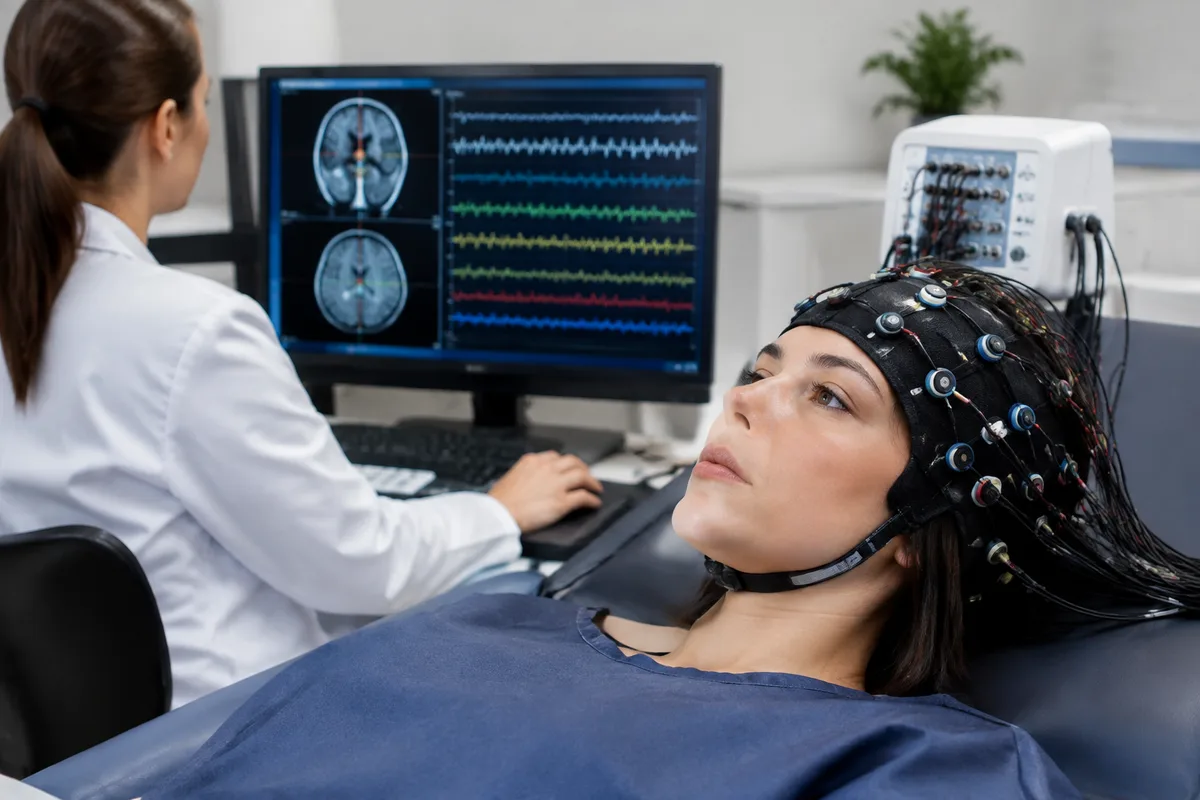
Neurodiagnostic testing is a group of tools used to measure the electrical activity of the brain, nerves, and muscles. An EEG (electroencephalogram) records electrical activity in the brain through sensors placed on the scalp, and is commonly used to evaluate seizures, unexplained changes in alertness, or other brain-related concerns.
EMG/NCS (electromyography and nerve conduction studies) look at how well nerves send signals and how muscles respond to those signals. A small amount of electrical stimulation and fine needle electrodes are used to see whether a nerve is compressed, damaged, or slow to conduct — information that is difficult to gather through a physical exam alone.
Evoked Potentials testing measures how quickly and accurately the nervous system responds to stimulation of the senses — sound, touch, or light — and can reveal whether a signal pathway between the body and brain is intact or interrupted. Together, these three tests give a fuller picture than any single exam, replacing a good deal of guesswork with measurable data.
How we use it at Physical Therapy and Rehabilitation Center of Brooklyn
At Physical Therapy and Rehabilitation Center of Brooklyn, EEG, EMG/NCS, and Evoked Potentials testing are used to accurately diagnose neurological conditions and guide treatment planning. This on-site diagnostic capability supports the practice's broader work in Neurology and Neurological Rehabilitation, helping to clarify what is happening before a rehabilitation plan is built around it.
Because MRI & X-Ray imaging is also available on site, neurodiagnostic testing can be paired with imaging when a fuller picture of both structure and function is needed. Findings from these tests can inform decisions about Pain Management, Back Injury Rehabilitation, Nerve Pain Rehabilitation, and other services on the practice's list, so that therapy is built around a clear understanding of what is actually happening in the nervous system rather than guesswork alone.
What it means for you
Objective testing can shorten the path to an accurate diagnosis, which in turn can mean fewer unnecessary treatments and a more focused plan. For patients dealing with unexplained pain, weakness, tingling, or coordination issues, neurodiagnostic testing offers a way to see what a hands-on exam sometimes cannot.
- Clarity — measurable data helps identify the specific nerve, muscle, or brain pathway involved.
- Coordinated care — results can be shared across your care team so that everyone is working from the same information.
- Fewer guesses — a clear diagnosis helps target rehabilitation instead of treating symptoms broadly.
- Convenience — testing performed on site can reduce the need to travel elsewhere for these studies.
What to expect during your visit
Before testing, you will typically be asked about your symptoms, medical history, and any medications you take, since some of these can affect results. For EEG, you may be asked to arrive with clean, dry hair and to avoid caffeine beforehand. For EMG/NCS, comfortable clothing that allows access to the area being tested is helpful.
During an EEG, small sensors are placed on the scalp while you sit or lie still, sometimes with specific tasks like opening and closing your eyes. During EMG/NCS, you may feel brief, mild electrical pulses and the sensation of a fine needle in the muscle being tested — most people describe this as a brief pinch or twitch rather than significant pain. Evoked Potentials testing involves sensors placed on the scalp while you are exposed to light, sound, or touch stimuli, and requires you to stay relaxed and still.
Testing sessions generally last anywhere from thirty minutes to just over an hour, depending on which studies are performed. Afterward, most patients can resume normal activity right away, and results are reviewed as part of your ongoing treatment planning.
Frequently asked questions
Is neurodiagnostic testing safe?
Yes. EEG, EMG/NCS, and Evoked Potentials testing are considered safe, non-surgical procedures that use small amounts of electrical stimulation or passive recording rather than radiation. Any mild discomfort, such as the pinch of a needle electrode during EMG, is brief and temporary.
Will testing hurt?
Most patients describe the sensations as mild rather than painful. EEG and Evoked Potentials testing involve no needles at all, while EMG/NCS may cause brief muscle twitches or a quick pinch that typically resolves as soon as the test is complete.
How long does testing take, and how often is it needed?
A single session usually takes between thirty minutes and just over an hour, depending on which tests are ordered. How often testing is repeated depends on your specific condition and how your treatment plan progresses over time.
Who is a good candidate for this kind of testing?
Neurodiagnostic testing is generally appropriate for anyone experiencing unexplained numbness, weakness, pain, coordination problems, or other neurological symptoms that need further evaluation. Your care team can help determine which specific tests, if any, make sense for your situation.
If you have symptoms that need a closer look, reach out to Physical Therapy and Rehabilitation Center of Brooklyn to ask how Advanced Neurodiagnostics can fit into your care.
This content is for general information only and isn't medical advice. Talk with a qualified provider about your own situation. If you have a medical emergency, call 911.