Prosthetic Training
Prosthetic Training
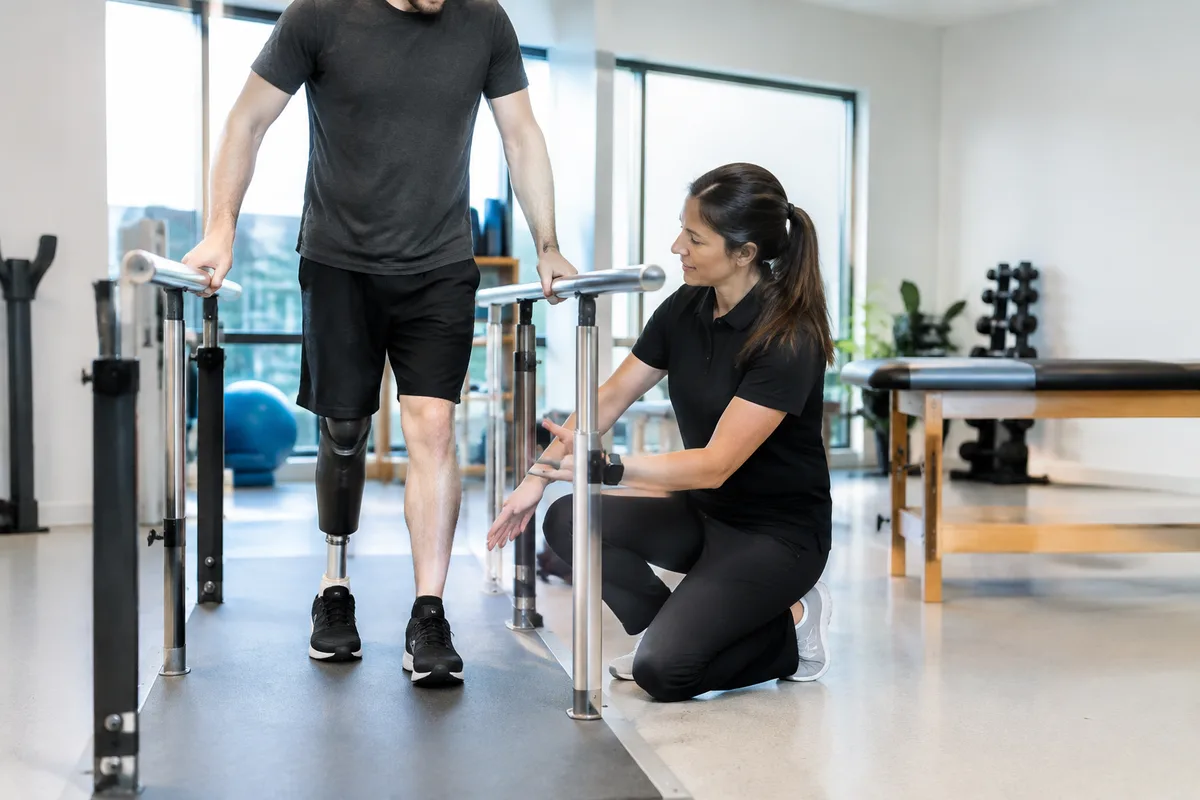
Prosthetic training helps people who have had a limb amputation learn to use a new prosthesis safely and confidently. Therapy focuses on building the strength, balance, and movement patterns needed for standing, walking, and daily activities with the device, while also addressing the residual limb and surrounding muscles as they adapt to new demands.
What Prosthetic Training Addresses
- Gait Training — relearning a steady, efficient walking pattern with the prosthesis.
- Balance and Weight-Shifting — building confidence transferring weight onto the new limb.
- Strength and Endurance — conditioning the residual limb, core, and remaining leg for daily movement.
- Fall Prevention — practicing safe transitions on stairs, uneven surfaces, and during transfers.
How Sessions Are Structured
Treatment often combines hands-on guidance with supervised exercise. Time on the treatment tables allows for stretching and manual work on the residual limb, while standing and walking practice builds tolerance for the prosthesis in real-world movement.
- Balance Boards and Balance Pads — challenge stability and retrain coordination as trust in the prosthesis grows.
- Treadmills — support supervised walking practice and gait refinement.
- Stationary Bikes — help rebuild leg endurance and joint motion.
- Resistance Bands and Dumbbells — add graded strengthening for the limb and core.
- Exercise Mats — used for floor-based stretching, transfers, and core work.
This content is for general information only and isn't medical advice. Talk with a qualified provider about your own situation. If you have a medical emergency, call 911.